⚙
Process Flow Description
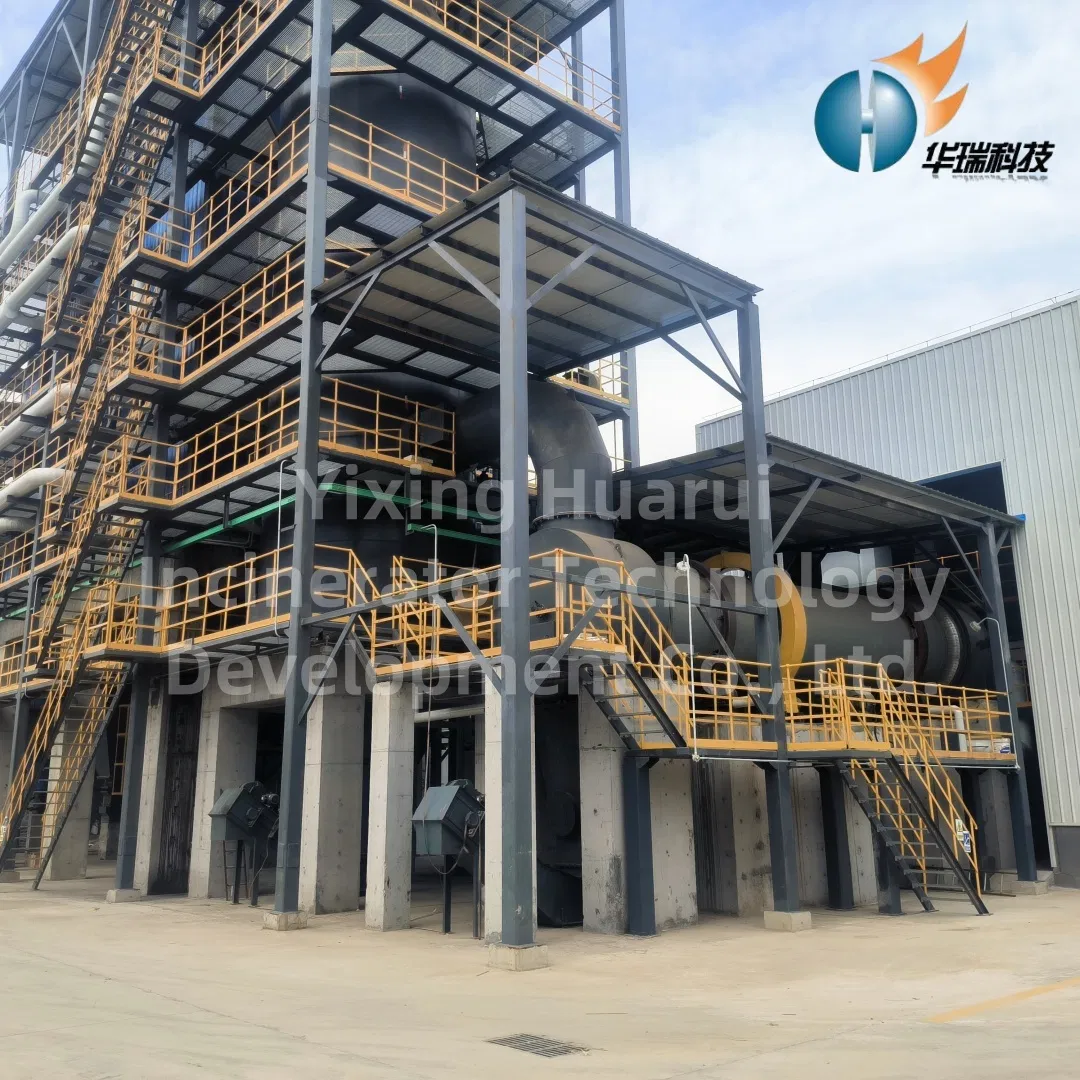
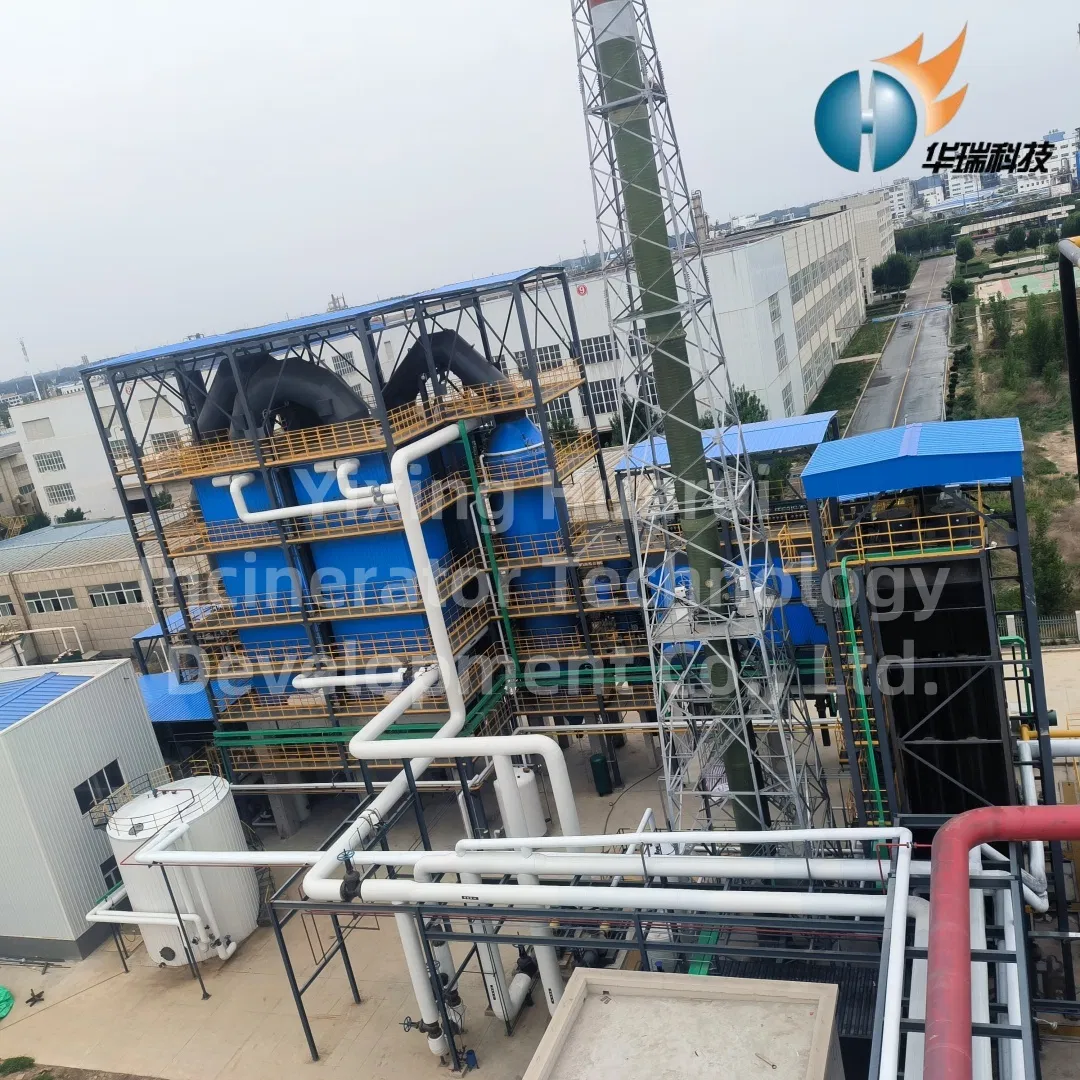
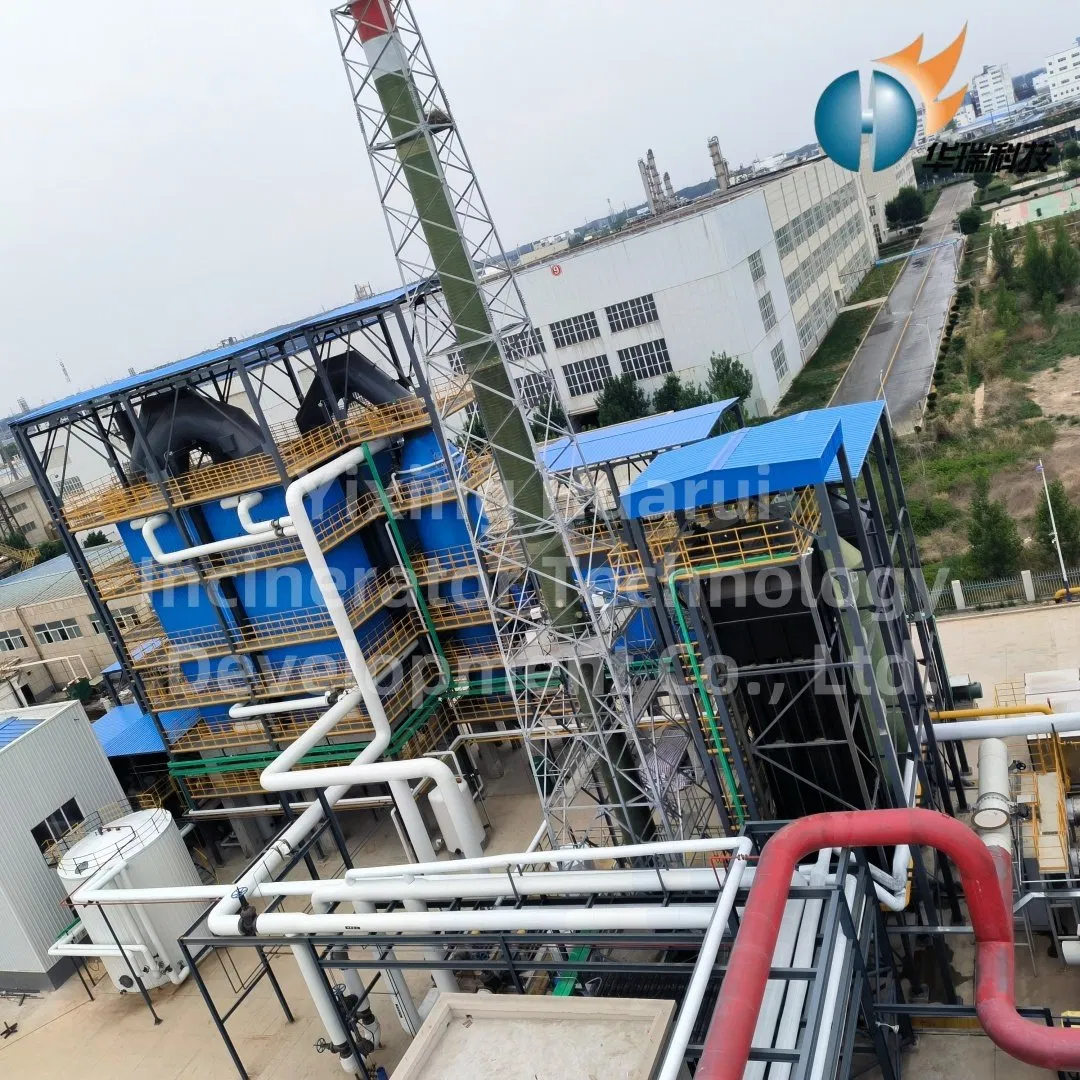
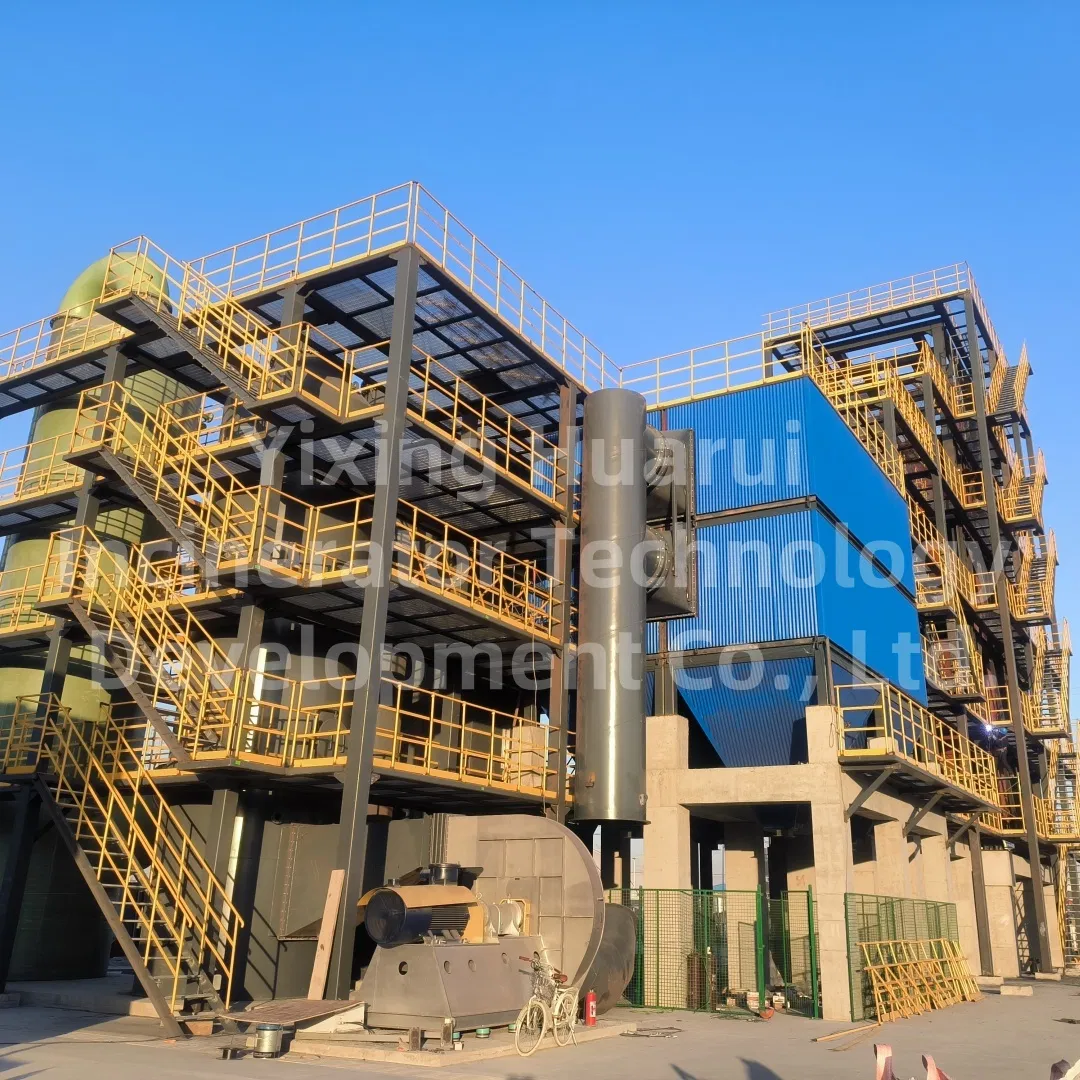
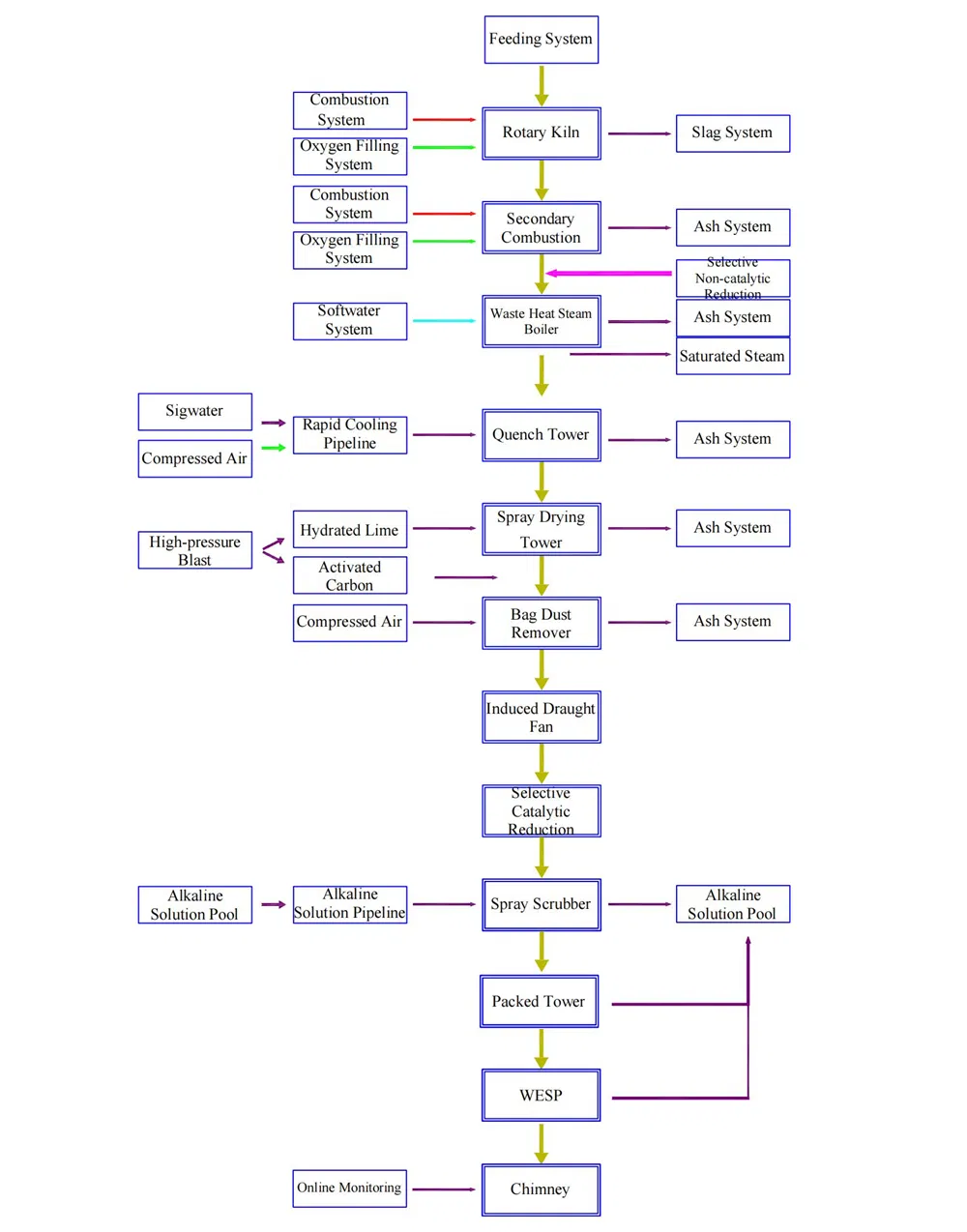
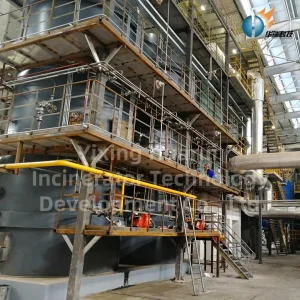
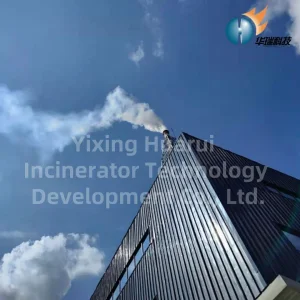
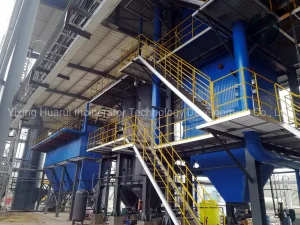
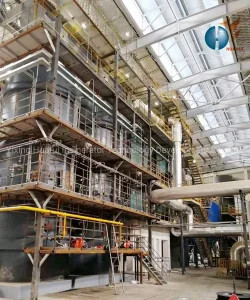
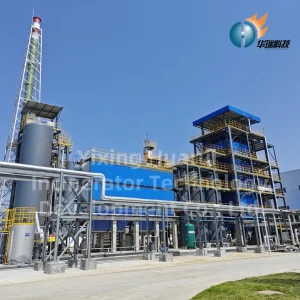
The light diesel oil delivery to the burner through the oil pipeline, the automatic ignition system make the furnace temperature rising slowly. According to the principle of 3T (temperature, time, turbine flow), the waste is oxidative, pyrolysis and combustion in the combustion chamber furnace. After burning the tail gas burned again and high temperature oxidation in the secondary combustion chamber. Secondary combustion chamber is multi-hull type, which set up three gravity dust collector structure to collect most of the dust. Flue gas go into the waste heat boiler and cooling and recycled into the steam for factory use. standard gas will discharged into the atmosphere through the chimney by the exhaust fan.
📋
Incinerator Device Includes
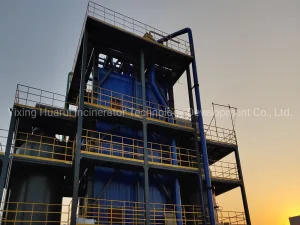
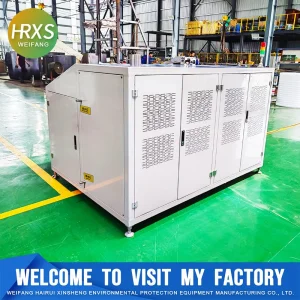
Crusher, frequency conversion feeding motor, high pressure conveying fan, rotary kiln, driving device, supporting device, secondary chamber, waste heat boiler, air heat exchanger, multi-pipe dust collector, spray tower, exhaust fan, chimney, diesel pipeline system, diesel ignition and combustion machine system, combustion chamber temperature automatic control system, electric control system, liquid atomizer, and operating platform.
?
Frequently Asked Questions
What types of waste can the HR-X model handle?
The system is designed for medical waste, industrial hazardous waste, dirt mud type waste, and ointment shape waste.
What is the combustion efficiency of this incinerator?
The HR-X incinerator achieves a combustion efficiency of ≥99.9% and a burning rate of 99.9%.
Is the equipment fully automated?
Yes, it features an automatic material filling system, automatic ash output, and an advanced automatic control system for safe operation.
What is the estimated service life of the incinerator?
With proper maintenance, the equipment has a service life of approximately 10-15 years.
Does the incineration process cause secondary pollution?
No, the system is designed to operate without smoke or smell, and it includes multiple dust collectors and a spray tower to prevent secondary public pollution.
What are the fuel requirements for operation?
The system is versatile and can be fueled by Diesel Oil, Natural Gas, or LPS.
 HURO Pets