Creating a home that welcomes pets is more than just style. It’s about comfort, safety, and functionality. As pet expert Dr. Emily Parker states, “Pet Friendly Home Design Ideas can transform a typical living space into a haven for your furry friends.” She emphasizes the importance of well-thought-out spaces that cater to both pets and humans.
When designing for pets, consider durable materials and easy-to-clean surfaces. Pet-friendly flooring options like tile or laminate can resist scratches and spills. Moreover, integrating cozy nooks or elevated pet beds can provide comfort without sacrificing aesthetics. Thoughtful designs help balance beauty with functionality.
However, creating a pet-friendly home is not without its challenges. Owners often struggle to find durable furniture that also maintains a sleek appearance. Additionally, safety is paramount; sharp edges and toxic plants must be avoided. Reflecting on these aspects makes pet-friendly design both rewarding and complex. The right choices can lead to a harmonious living space for both humans and pets.
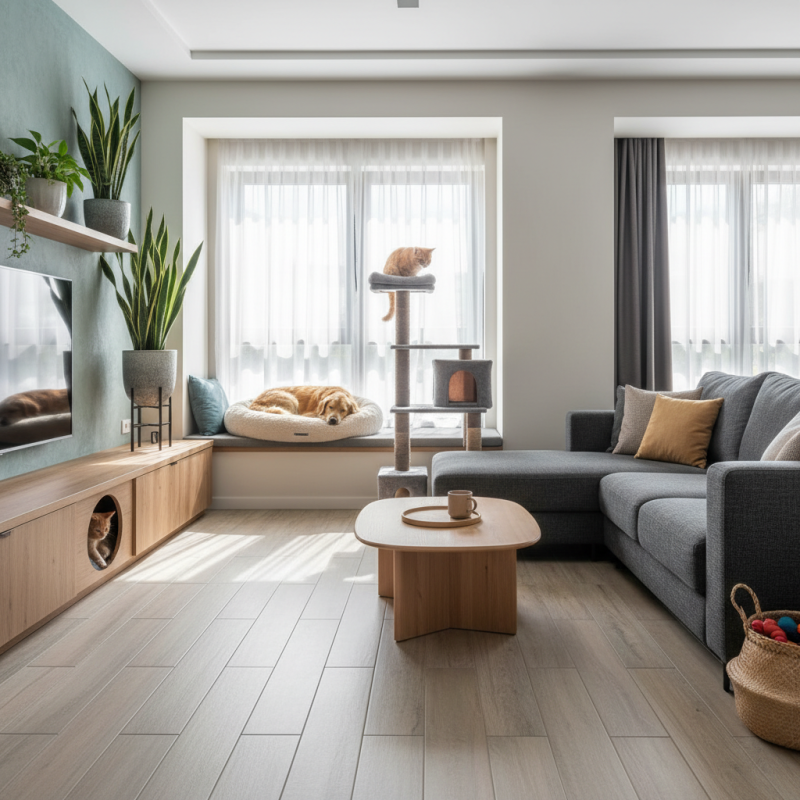
Creative Flooring Solutions for Homes with Pets
When designing a home for pets, flooring is a critical element. Many pet owners want durability and comfort for their furry friends. One popular option is luxury vinyl flooring. It’s resistant to scratches and water, making cleanup easier. Another choice is tile. It’s easy to clean but can be cold for pets. Consider using area rugs made from natural fibers. They offer warmth but can be tricky to maintain.
Tips: Choose slip-resistant surfaces. This helps prevent accidents and injuries for both pets and people. Regularly check for wear and tear. Replace damaged flooring promptly to avoid hazards.
Also, think about sound absorption. Carpet tiles can minimize noise, making the home quieter for your pets. An unglazed ceramic tile provides traction, which is important for older pets. Keep in mind that while aesthetics matter, functionality is key. Balancing style and practicality can be challenging but rewarding.
Durable and Stylish Furniture Choices for Pet Owners
When designing a pet-friendly home, choosing durable and stylish furniture is key. Consider fabrics like leather or microfibers, which resist stains and are easy to clean. Opt for colors that blend well with pet fur. Neutral palettes can hide hair and dirt, reducing the frequency of cleaning.
Tip: Look for multi-functional furniture. A storage ottoman can provide a place for toys while also serving as extra seating. This helps keep your space tidy and functional.
Selecting sturdy furniture is crucial. Thin legs or delicate frames may not withstand playful antics. Choose solid wood or metal pieces for longevity. These materials can endure wear and tear from curious paws.
Tip: Avoid sharp edges. Smooth surfaces are safer for both pets and humans. Additional cushions can offer softness, but ensure they are removable and washable. Small details matter when creating a safe environment for your furry friends.
Top 10 Pet Friendly Home Design Ideas for Happy Paws
| Design Idea |
Material |
Benefits |
| Washable Rugs |
Synthetic Fibers |
Easy to clean, stain-resistant |
| Durable Upholstery |
Microfiber |
Resistant to scratches and stains |
| Elevated Dog Bowls |
Wood or Metal |
Improves posture and hygiene |
| Pet-Friendly Plants |
Non-toxic varieties |
Safe for pets, enhances decor |
| Scratch-Resistant Flooring |
Laminate or Vinyl |
Durable, easy to clean |
| Stylish Pet Beds |
Washable Covers |
Elegant and practical |
| Multi-functional Furniture |
Wood or Metal |
Saves space, accommodates pets |
| Pet Gates |
Wood or Metal |
Keeps pets safe, adds style |
| Storage Solutions |
Baskets or Cabinets |
Organizes pet items, declutters |
| Decorative Pet Gates |
Wood with Paint |
Aesthetic as well as functional |
Incorporating Pet-Friendly Outdoor Spaces in Home Design
Creating a pet-friendly outdoor space can significantly enhance the lifestyle of both pets and their owners. Research shows that 70% of pet owners consider their pets when designing outdoor areas. This consideration leads to better yard layouts that cater to the energetic needs of dogs and the playful nature of cats. Enclosed spaces like dog runs or catios provide a safe environment, allowing pets to enjoy fresh air while keeping them secure.
Moreover, incorporating natural features such as shaded areas, water elements, and durable plants can improve the overall outdoor experience. Experts recommend using pet-friendly materials, like gravel or synthetic turf, to minimize mess and maintenance. In fact, 80% of pet owners reported lower stress levels when their pets had access to a well-designed outdoor space. However, sustainability should also be considered. While some materials are more pet-friendly, they may not be eco-friendly. Finding a balance that prioritizes both pets and environmental impact is crucial.
Additionally, it's essential to reflect on the challenges of creating such spaces. If not designed thoughtfully, outdoor areas can lead to issues like soil erosion or unwanted digging. Regular maintenance, while necessary, can sometimes feel overwhelming. Owners must remain mindful about how their pets interact with these designed spaces, ensuring that their needs are met without compromising the integrity of the environment.
Top 10 Pet Friendly Home Design Ideas for Happy Paws
Smart Storage Solutions for Pet Supplies and Accessories
Creating a pet-friendly home often starts with smart storage solutions for supplies and accessories. According to a recent study, about 70% of pet owners feel that organizing pet items improves their home environment. Inefficient storage can lead to chaos, making it hard to find that favorite toy or leash.
Consider using multi-functional furniture. Ottomans with hidden compartments can store toys while providing seating. Wall-mounted shelves can hold food containers and grooming tools. These ideas maximize space and keep your home tidy.
Tip: Use labeled bins for toys, treats, and grooming supplies. This not only organizes but also creates a quick-access system.
Another idea is to create a designated pet station. This could be a small area with hooks for leashes and a shelf for food and water bowls. Install a durable cabinet to hide away your pet’s essentials. This area will be a one-stop shop for all pet-related needs.
Tip: Regularly assess the storage space. Is it working? Or do you need additional solutions as your pet grows? Reflecting on these questions can lead to a more harmonious living space.
Designing Safe and Comfortable Spaces for Pets Inside the Home
Creating a pet-friendly home involves more than just choosing the right furniture. It requires thoughtful design that prioritizes safety and comfort. According to the American Society for the Prevention of Cruelty to Animals (ASPCA), pet accidents in the home are common. Therefore, selecting materials that are both dura
ble and easy to clean is essential. For example, hardwood or tile floors can be more practical than carpet, which can trap odors and stains.
Open floor plans can enhance the flow of movement for both pets and humans. Keeping pathways clear of clutter is crucial to prevent accidents. When considering furniture, look for rounded edges. Sharp corners can pose risks to curious pets. A study by the American Pet Products Association suggests that 68% of U.S. households own a pet, indicating a growing need for suitable living spaces. Basic elements like pet-friendly rugs and washable slipcovers can transform any space into a haven for your furry friends.
Designing comfortable spaces means acknowledging your pet's needs. Offering pet-specific areas, like cozy nooks or dedicated play zones, fosters a sense of security. However, it's worth noting that excessive clutter or a lack of designated areas can lead to stress for pets. It’s important to regularly assess how well those spaces are working. Small adjustments may greatly improve your pet's quality of life at home.
FAQS
: Luxury vinyl flooring is durable and water-resistant. Tile is easy to clean but may be cold for pets.
Choose slip-resistant surfaces to prevent accidents. Regularly check for wear and replace damaged sections quickly.
Carpet tiles can absorb sound and create a quieter environment for your furry friends.
Use multi-functional furniture like ottomans with hidden compartments for toys and seating.
Set up an area with hooks for leashes and a shelf for food bowls. Keep essentials stored out of sight.
Use labeled bins for toys and grooming supplies. Regular assessments of your storage solutions are helpful.
While style matters, ensuring practicality can be difficult. Reflect on what truly fits your pet's needs.
They provide warmth but can be harder to maintain, requiring more frequent cleaning.
It's essential to regularly inspect for damage to avoid potential hazards for your pets.
Look for materials with traction, like unglazed ceramic tile, to assist older pets in moving safely.
Conclusion
The article "Top 10 Pet Friendly Home Design Ideas for Happy Paws" presents a comprehensive guide for pet owners looking to create a harmonious living environment for both their furry friends and themselves. One key aspect covered is the implementation of creative flooring solutions that are both stylish and resistant to wear and tear caused by pets. Additionally, the article highlights durable furniture choices that can withstand the playful antics of animals while still enhancing the home’s aesthetic.
Moreover, it emphasizes the importance of incorporating pet-friendly outdoor spaces into home design, allowing pets to enjoy the outdoors safely. Smart storage solutions for pet supplies and accessories are also discussed to maintain organization and cleanliness. Finally, the article focuses on designing safe and comfortable areas for pets within the home, ensuring that every corner is both functional and welcoming. These Pet Friendly Home Design Ideas aim to create a joyful living space where pets and owners can thrive together.

 HURO Pets